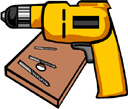
Confused by drill bits? Don't be.
The twist drill has the twist right to the end, with sharp cutting edges as part of the twist. It is used for cutting metal and wood. You can use it on plastics, but as a general rule work at a very low speed to avoid melting the plastic and clogging the bit.
The masonry drill has a special tungsten carbide tip welded into the twist part of the drill body, and it is this hardened piece that cuts into masonry. There are general-purpose masonry drills, but also tougher types better able to cope with the now popular hammer-action methods of drilling into hard masonry.
When drilling masonry, always withdraw the tip about every 5 seconds to allow the tip to cool, keeping the drill running. Failure to do so can lead to overheating of the tip, causing irreparable damage.
There are simple drill sharpening devices now available which connect to an electric drill and enable you to sharpen both twist and masonry drills.
Always wear eye protection when drilling. And wear a simple dust mask when using hammer action on masonry.
Drilling glazed surfaces such as ceramic tiles can be tricky. Mark the spot to be drilled with a cross formed of clear adhesive tape. This will hold the drill tip in place just long enough to make a start. Never use hammer action on tiles?
Screwfix is the UK's largest direct and online supplier of trade tools, accessories and hardware products. To view their range of power tools customers can visit the website here: http://www.screwfix.com/c/tools/power-tools/cat830692.