The cheapest form of fencing is galvanised or plastic-coated netting supported on galvanised wires anchored to posts. The secret is to strain the wires really tight, and for this buy special wire straining bolts which pull the wire taut as the nuts are tightened. The posts must be very well anchored.
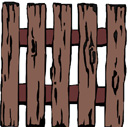
A fence of open palings is sufficient to divide off a garden and offers little resistance to the wind, so is unlikely to be damaged even in severe storms.
A woven panel fence offers privacy, but has no great strength. So in exposed areas of high winds, it is best not to go above about 5ft/1.5m and then it is best to use slotted concrete posts into which the panels slide. In high winds the panels may be forced out, but without damaging the structure of the fence.
Concrete posts are the most trouble free, but if you want to use timber, select pretreated posts which have been impregnated with preservative.
To treat your own posts, make up a simple trough with two rows of bricks and a sheet of 500 gauge polythene. Fill the trough with preservative. Lower in the posts and weigh them down with bricks and leave to soak overnight. Superficial brush applications of preservative have very limited effect.
Protect the tops of wooden posts with timber caps screwed or nailed in place. It is the ends of posts where the damp is most likely to soak in.
Horizontal fence supports, called arris rails, often rot where the rail enters the post. You can buy special galvanised support brackets that screw to both rail and post, making a strong repair. The brackets can also be adapted to suit concrete posts.
Give your timber fencing an annual coating of wood preservative. More and more environmentally friendly preservatives are appearing in the shops; being water-based, they don't harm plant life.
If you have trellis topping a fence, prevent roses from twining through the trellis because eventually they destroy the slats. Rather, tie them to the surface of the trellis.