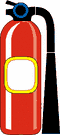
There are two different categories of fire -Class A and Class B -which depend on the materials that are burning. Class A fires involve solids, such as wood, cloth, paper, plastic and coal. Class B fires involve liquids, such as grease, fats, oil, paint and petrol. Different types of extinguisher are needed to put out the different types of fire. You need to choose them according to the possible fire risks in your home. If you are unsure about the type of fire blanket or extinguisher to buy, ask the advice of your local fire brigade.
Fire blankets, which are made of a fire retardant material, are best kept in the kitchen. There they can smother burning oil, chip-pan fires and a person's clothing which has caught alight. They must conform to British Standard BS 6575 and be at least 3 x 3ft/90 x 90cm. Few can be used again after putting out a fire. Since many fires in the home begin in the kitchen, if you can't afford any other sort of extinguisher elsewhere in the house, this is where you should definitely have one.
A multipurpose dry powder extinguisher is best for solids and liquids, but must not be used on chip pan fires. It can also be used on live electrical equipment. It knocks down flames and melts on burning solids to form a smothering skin.
An aqueous film-forming foam (AFFF) extinguisher is equally good for Class A and Class B fires but must not be used on chip pan fires. It works by forming a film on the burning surface which extinguishes the flames and has a cooling effect.
A Halon 1211 (also known as BCF) extinguisher is best for Class B fires except chip pan fires, and Class A fires in a small area. It is also effective on live electrical equipment and is ideal for use in cars. However, it does not cool fires efficiently and the flames may start up again. Also, its fumes can be harmful in confined spaces or when used on metal. Ventilate the area well after the fire has been put out.
Water extinguishers are good for cooling burning material and will put out Class A fires, but they must not be used on live electrical equipment or on Class B fires.
Carbon dioxide extinguishers smother flames by displacing the oxygen in the air, and are best for Class B fires except chip pan fires. They can also be used on live electrical appliances but must not be used on Class B fires. One disadvantage, however, is that they do not cool very well and the fire may start up again. The fumes can also be harmful in confined spaces.

 THE WORST TIP I HAVE EVER READ