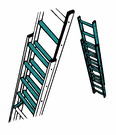
Spray-paint the top two steps of a step-ladder bright orange or red as a visual reminder to keep off them. Always allow at least three rungs of ladder above gutter level as a handhold.
Never climb a ladder with your hands full. Wear a tool belt into which tools and accessories can be stuffed, leaving your hands free to hold the ladder rungs.
Before climbing an extension ladder, jump up and down lightly on the bottom rung a few times to make certain that the legs are firmly planted.
On muddy or frozen ground, drive two 4 x 2in/100 x 50mm stakes into the ground behind the ladder. Then tie ropes around the second rung from the bottom, knot them tightly and secure them to the stakes. If the ground is soft, stand the ladder on a piece of wood, then lash it to the stakes.
When working high on a ladder against the house, lash the ladder through an open window so that it can't move. Tie one end of a rope to a rung about two-thirds of the way up, and the other end to a radiator or other solid object inside. Or use a 4 x 2in/100 x 50mm length of wood long enough to bridge the inside of the window.
Although PVC guttering is strong enough to take the weight of a ladder, it is slippery. So insert ring bolts about 3ft/1m apart into the fascia board (the board to which the gutter is screwed). Then, when the ladder is in use, run a piece of rope around a ladder rung and through the nearest ring bolt.
As a safety precaution, always keep your hips within the vertical rails of the ladder.
If you have to put up an extension ladder on your own, extend it on the ground, then rest the base of the ladder in the angle between the wall and ground. Now lift the other end of the ladder; stand under it and move your hands along the rungs, hand over hand, until the ladder is vertical. Lift the foot of the ladder away from the wall.• The correct angle for a ladder is 12in /300mm away from the vertical for every 4ft/1.2m up (a 1:4 angle).