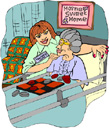
There is an important difference between nursing and residential homes: a home which advertises itself as a nursing home for the elderly should offer skilled nursing care and be run by a qualified doctor or nurse. A residential home is for an elderly person who is not ill or frail.
How to find one Your social services department will have a list of nursing homes, although there are very few places available on the NHS. Local authorities provide a certain number of places in residential homes, although these are usually allocated according to need. Social services and voluntary organisations such as Age Concern can put you in touch with private homes. Also ask for word-of-mouth recommendations.
Draw up a shortlist and visit as many as possible together with your elderly parent or the person who is going to stay there. Your first reactions will probably be negative, but in time both of you are likely to see which of the homes will be most suitable.
Ask yourselves the following questions and take time to discuss them all with your elderly dependant.
- Do the staff and residents seem friendly to you?
- What is the staff-resident ratio? For full-time care, this should be one staff member for every three to five residents.
- Are there double rooms for couples?
- Do residents have their own bath-rooms?
- Are there aids for the disabled?
- What social activities are provided?
- How much independence can the residents have (for example, can they keep their own pension books)?
- Is the home near family?
- What is the weekly menu like?
- What arrangements are made for religious worship?
- Can a trial stay be arranged?
- Can you visit regularly?
How to pay The local authority subsidises most residents in its own homes, although the amount depends on private means. Residents in private homes might be entitled to Income Support. To find out, contact social services and your local branch of voluntary organisations such as Age Concern and Help the Aged.
Dealing with your guilt
or either of you.
Perhaps the most difficult problem will be bringing up the subject in the first place. But it is imperative to face this emotional situation honestly.
come to terms with any revulsion you yourself feel for nursing or residential homes. Visit several homes in your area, and try to focus on how well they keep their patients functioning.
Listen to your relative's concerns; he will be more reassured if you let him air his fears. His major worry is likely to be abandonment. You must be very firm about the nursing or residential home being part of your continuing care - not the end of it.
An important consideration is proximity to family members. Frequent visits will be the best way to reassure your relative that your love and concern are as strong as they always were.