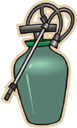
Many pesticides can be harmful to humans and pets as well as to insects other than those you're targeting. But there are ways of using them that minimise harm, and there are other types of pesticide which are selective or less harmful.
Treat plants with pesticide only when they are affected, and only those individual plants on which pest damage is evident. Don't treat a whole bed of plants just because one plant is infested.
Use a pesticide that does as little harm as possible. The label will tell you what it kills. Follow the instructions closely.
Treat houseplants outside.
When using chemicals, protect your hands with rubber gloves. Keep a set of gloves, a watering can, a spray bottle and mixing stick specially for use with pesticides. Rinse them thoroughly with clean water after applying the pesticide.
If you have to use a pesticide that is harmful to bees, apply it in the evening, when the bees are back in their hives.
If there is the slightest breeze, don't use sprays or dusts. Apply dusts first thing in the morning when they can stick to the dew.
Organic pesticides You can reduce the danger of pesticides by using so-called organic pesticides. Traditional remedies are not advised, since government regulations prohibit the use of substances that have not been approved by the Ministry of Agriculture, Fisheries and Food. There are some substances, however, such as those usually used as disinfectants (like boric acid), which can be used in homemade remedies. 'Organic' pesticides which are government approved include: insecticidal soap,which controls aphids, white fly, red spider mite, scale insects and mealy bugs; quassia, which controls aphids, some caterpillars, sawfly and leaf miners; copper fungicide (Bordeaux and Burgundy mixture), which controls mildew and blights; dispersible sulphur, which controls fungi and rust; derris, which kills caterpillars and similar leaf-eaters; and pyrethrum, which kills most insects, including ladybirds and bees. Derris and pyrethrum are not selective, so use them as a last resort.
Organic pest control
Remove caterpillars, leatherjackets, slugs and snails by hand, and destroy them. Squash cutworms with a trowel.
Whitefly are attracted to the colour yellow - hang up a strip of yellow card smeared with petroleum jelly.
Encourage natural predators. Lady-birds feed on a number of pests, such as aphids, mealybugs and scale insects. Birds eat grubs, caterpillars, slugs and aphids, but protect plants vulnerable to birds with netting. Beetles, centipedes, frogs, hedgehogs, hoverflies and lace-wings are all natural predators.
Grow a mixture of different plants. This encourages a greater number of predators than monocultures do.