The fuel gauge reads Empty and you think there's a service station within a few miles. Here's how to conserve fuel by coasting. Turn on the hazard lights and move into the slow lane or onto the shoulder of the road. If your car is an automatic, slowly accelerate to 30mph/48kph, then shift into Neutral and coast until your speed reaches 10mph/16kph. Then repeat the process. With a manual transmission, coast downhill whenever you can, but don't let the car slow to the point where you must shift into a lower gear.
If your engine is sputtering to a stop, turn on the hazard lights and try to coast off the road to a safe spot. Leave the lights on and use a distress signal, such as a raised bonnet or a white cloth on the aerial, then call or wait for help.
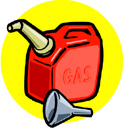
Keep an empty fuel container in the boot in case you run out of fuel and can walk to a service station. Never carry petrol in it in the car: the risk of fire or explosion is too great.
Carry a siphon pump or some rubber hose so that another motorist can give you some petrol. But check what grade of petrol it is - leaded fuel will damage a car fitted with a catalytic converter.
After running out of petrol, your refuelled car may be difficult to restart. Press down the accelerator once, then release it. Turn the ignition without pumping the accelerator; you may have to run the starter motor for 15 seconds or more. If the first attempt fails, wait for two minutes and try again. If a third attempt fails, call for help.


 Thankyou
 Best of 2 options
 This isn't right!!